
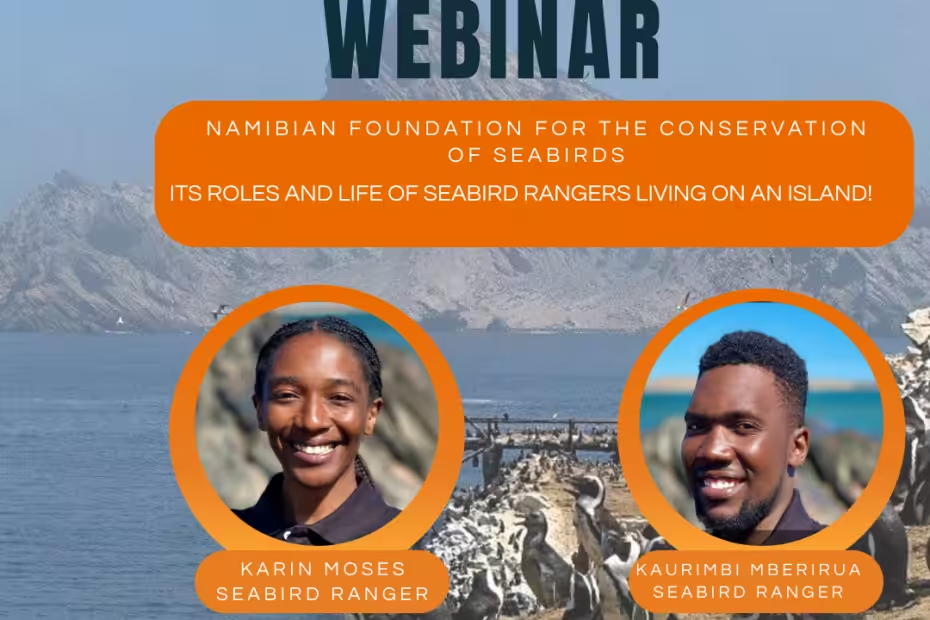
Would you ever consider living and working on a remote island? Where your only sources of entertainment are the ocean waves and bird songs? You’re probably already calculating your leave days, aren’t you?
For the young seabird rangers at NAMCOB (Namibian Foundation for the Conservation of Seabirds), this isolated work environment is part of their commitment to conservation. During our first webinar of the year, on 13 March 2026, seabird rangers Karin Moses and Kaurimbi Mberirua shared firsthand experiences of working on remote islands to protect Namibia’s vulnerable seabird populations.
NAMCOB is a non-governmental organisation based in Lüderitz. It was established in 2023 to focus on rescue, rehabilitation and conservation of African penguins and other threatened seabirds. Its goals include strengthening crisis response, monitoring and research, engaging communities and raising awareness.
NAMCOB operates within Namibia’s Marine Protected Area (NIMPA), which spans approximately 9,500 km² – making it one of the largest marine protected areas in Africa. The organisation collaborates with several partners, including the Ministry of Agriculture, Fisheries, Water and Land Reform (MAFWLR), Namibia Nature Foundation, Debmarine-Namdeb Foundation, and SANCCOB
Why are seabirds important?
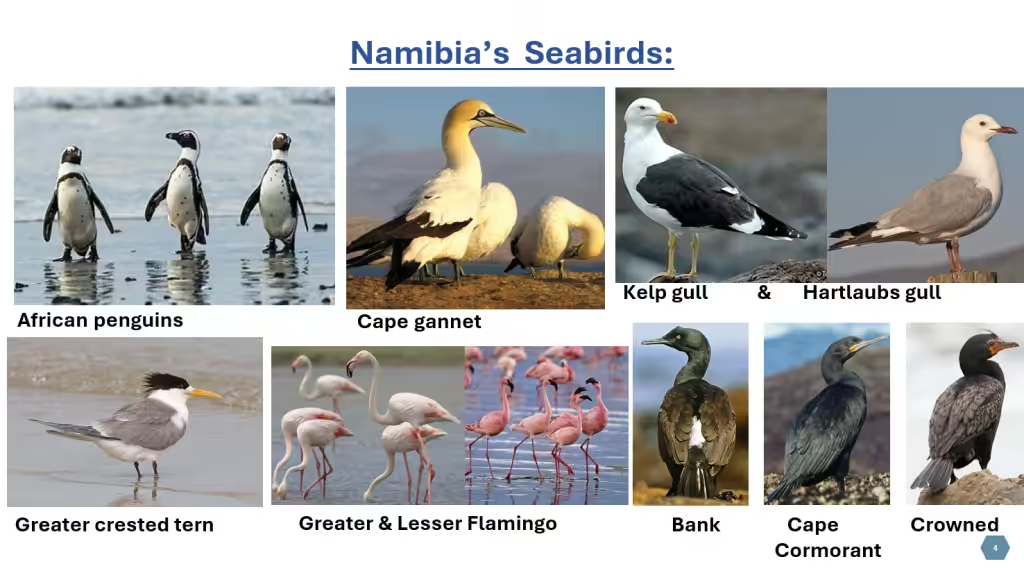
Birds are often overlooked by the public, especially our seabirds. Many people are only familiar with flamingos and penguins on Namibia’s coastline. However, there are other species like Cape Gannets, Kelp and Hartlaub’s Gulls, Greater Crested Terns, as well as Bank, Cape and Crowned Cormorants. These birds play an important ecological role by transferring nutrients from the ocean to land ecosystems and acting as indicators of ocean health. Their population trends can signal environmental changes such as pollution or food shortages. Despite their importance, many of Namibia’s seabirds face serious challenges. For instance, the African Penguin is listed as Critically Endangered, while the Cape Gannet and all the cormorant species mentioned above are listed as Endangered on the IUCN Red List of Threatened Species. These statuses show the urgent need to protect these birds, and NAMCOB is the first and only NGO in Namibia that is dedicated to seabird conservation.
 © NAMCOB
Why are our seabirds in danger?
During the session, Karin and Kaurimbi pointed out that human activity is the biggest threat to seabirds. Overfishing, coastal and marine diamond mining, guano harvesting, and the risks associated with oil exploration are all caused by humans. Apart these threats, seabirds suffer from disease outbreaks (bird flu) and predation, especially from Cape Fur Seals.
What are the NAMCOB rangers doing to help?
Although seal predation is natural, it is a bigger threat than it used to be due to human activities. Guano mining has exposed the birds’ eggs (they used to nest in the guano), while overfishing is a key reason for the colonies being smaller and the seals being hungry (their main diet is fish). The seabird rangers managed to reduce seal predation by repurposing old wooden planks into barriers to block seal entry points to the bird colonies. This resulted in a significant reduction in predation incidents over several weeks.
Of all the islands, Mercury Island had experienced the most severe population declines. These threats have contributed to significant population declines, making conservation efforts urgent.
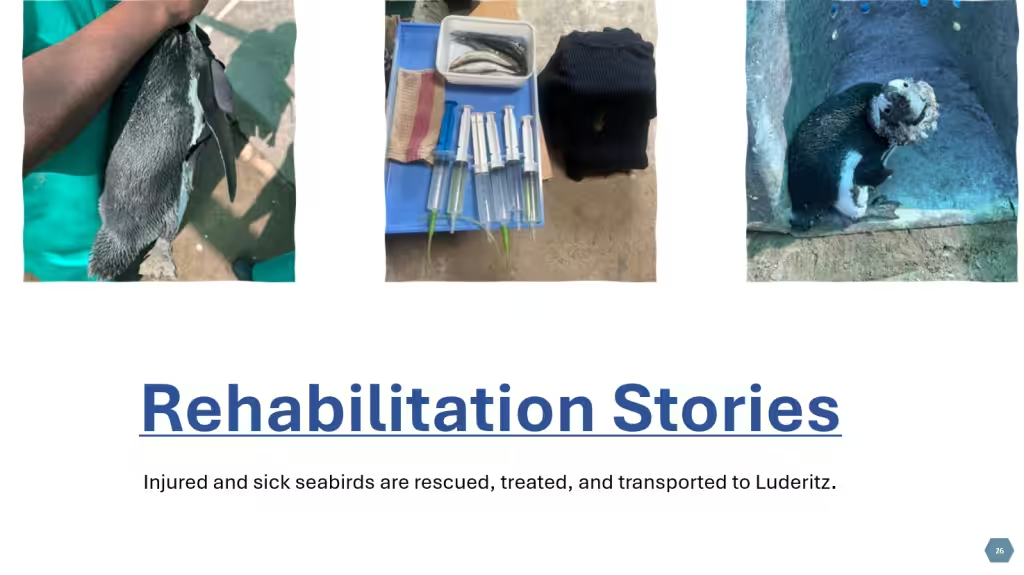
Rehabilitation procedures for seabirds are crucial due to the wide range of threats they face, including injuries from seal predation and contamination from oil spills. The help they receive includes health checkups, wound treatment, feeding and cleaning. When possible, birds are moved to a special centre in Luderitz for extra care. With more oil exploration happening in Namibia, the risk of oil spills is higher, so NAMCOB has set up emergency teams and small stations along the coast to quickly help birds in trouble.
 © NAMCOB
Life of a seabird ranger on a remote island
Karin and Kaurimbi explained their routines, which involve six‑week ranger deployments to the islands. While on the islands, the rangers do two daily patrols, one at 8 a.m. and another at 5 p.m. During breeding seasons, patrol routines are adjusted to minimise disturbance to nesting birds. Rangers may also conduct additional patrols from fixed observation points. Weather conditions – sea temperature, air temperature and wind patterns – are monitored daily as they influence field operations.
Working on remote islands is challenging, usually with no reliable internet access and limited communication with the mainland. Rangers face emotional and physical challenges, including long working hours and social isolation. However, they described the experience as deeply rewarding, offering a unique connection to nature. Working in such remote and dynamic environments requires adaptability and resilience. Rangers must respond quickly to changing weather conditions, wildlife behaviour and unexpected threats.
Overall, the webinar highlighted both the challenges and importance of seabird conservation in Namibia. Participants got insight into the realities of field-based environmental work.
If you are thinking whether you’d consider being a seabird ranger, remember that protecting seabirds is vital for maintaining the health and balance of marine ecosystems, which ultimately determines our health too. Therefore, if you’re not shaken by isolation, then endeavours like these are worth it. The environment will thank you for it.
Click here to download the PowerPoint presentation (pptx, 40 mb)
Did you know? The Namibian Youth Chamber of Environment (NYCE) has a membership category named after the African Penguin. This was strategically done to raise awareness on these endangered bird species.